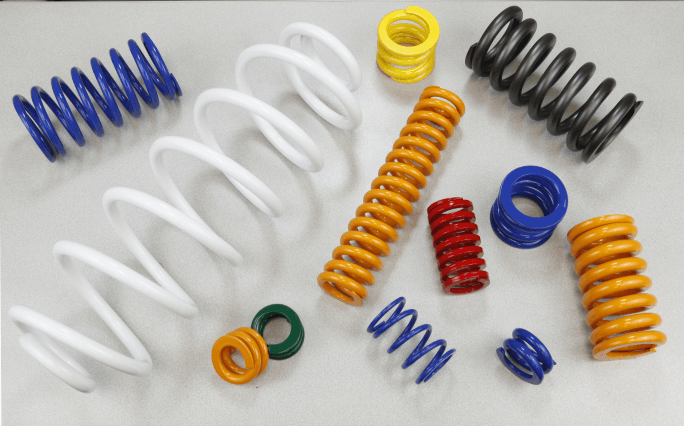
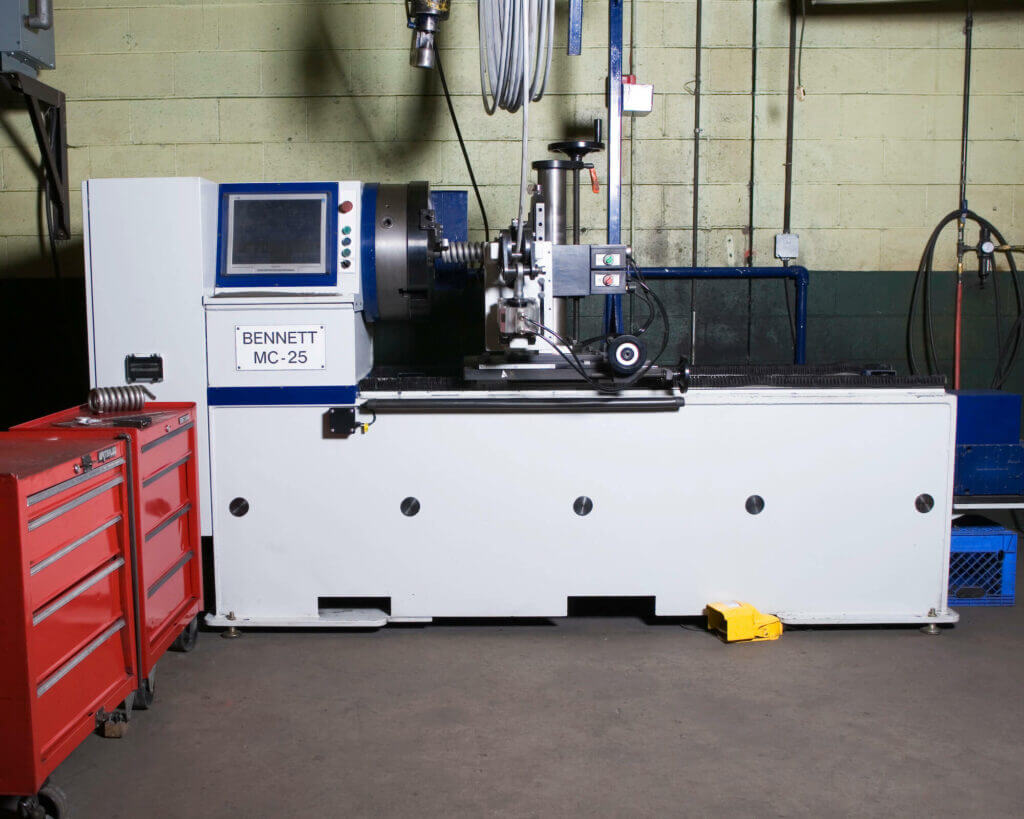
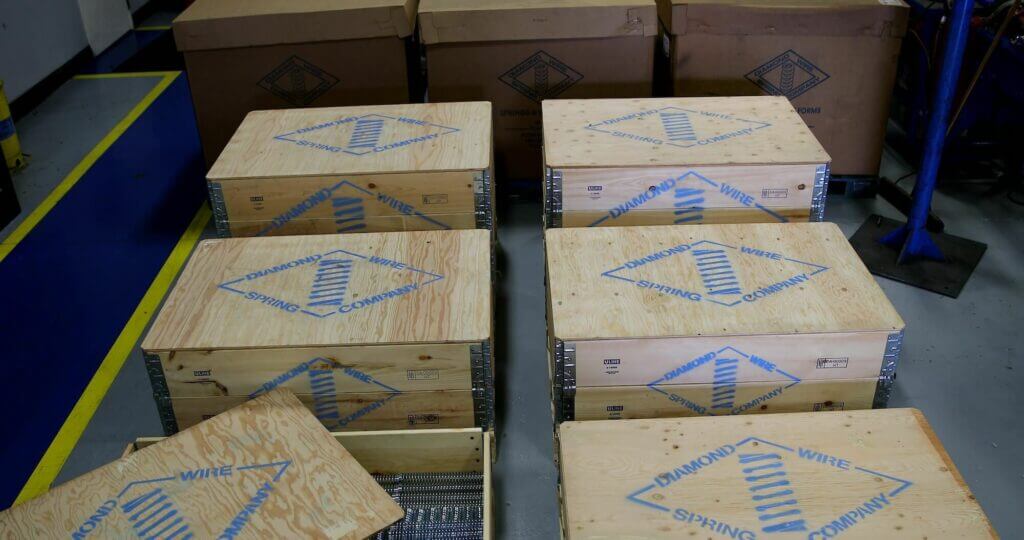
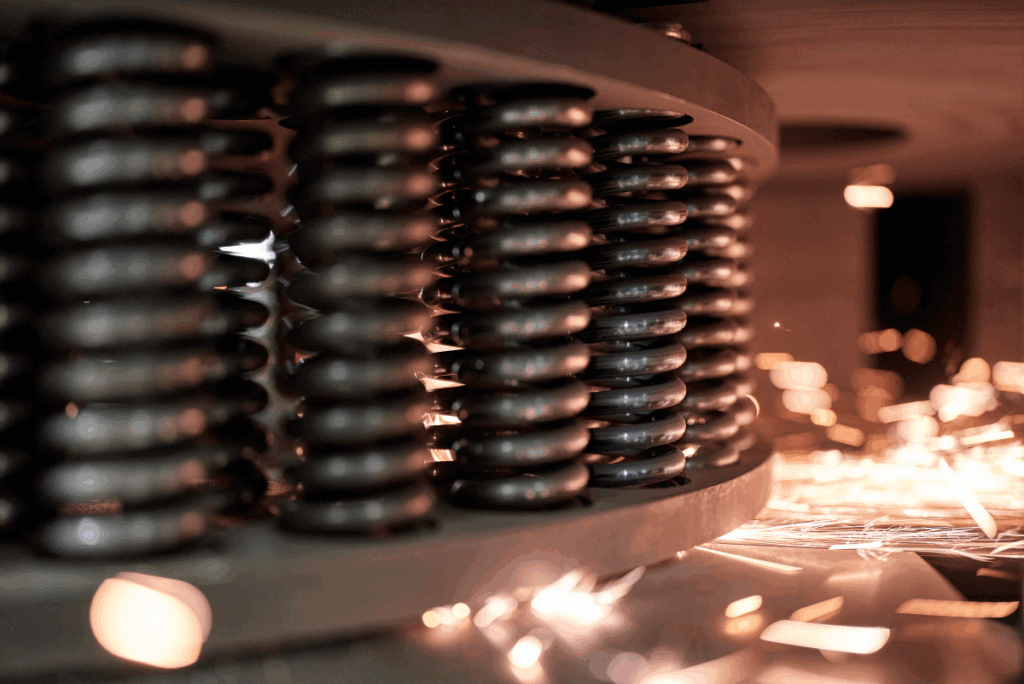
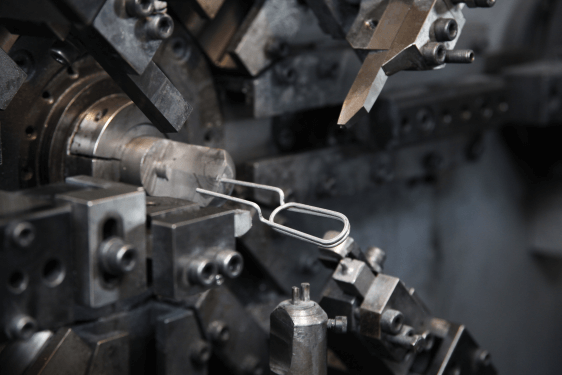
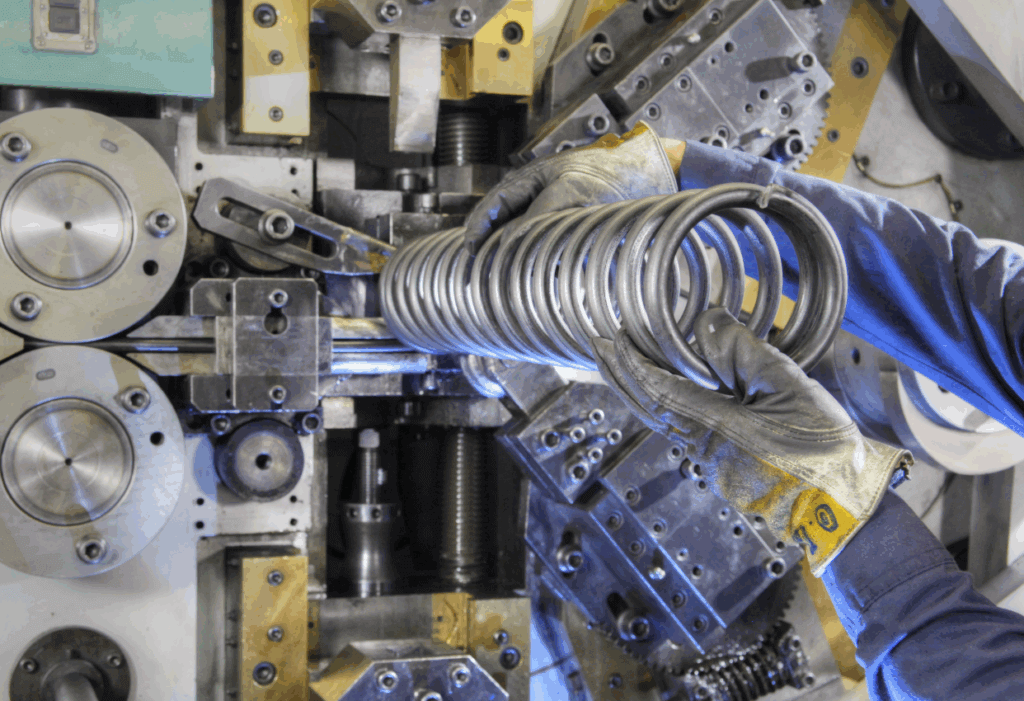
Diamond can finish parts In House or send out to for specialized coating or testing.
Often spring coatings and spring surface treatments are chosen. Most are primarily responsible for corrosion prevention or color coding, while others are intended to improve the spring surface hardness or wear resistance. The chart below shows various types of spring coatings and spring treatments for spring materials.
You can slide/touch the table left or right to show more data.
Finishing Options
ArmorGalv
ArmorGalv® is a thermal diffusion galvanizing process which provides heavy-duty corrosion and abrasion protection ensuring product functionality in harsh environments.
Black Oxide
Black oxide is a chemical conversion coating applied to metals, primarily ferrous materials, to enhance corrosion resistance, reduce light reflection, and improve aesthetic appeal.
Electro-Coating (E-Coating)
E-Coating serves as a robust primer layer providing exceptional corrosion resistance, or it can function as a durable, standalone final finish.
Electro-Plating: Zinc Chromate
Electroplating is the process of applying one or more layers of a metal to a part by electrolytically depositing the metal onto the part. The deposited metal protects the base coating form oxidation. It can also add to the decorative appearance of the part.
Geomet
Is completely chrome-free and applied to protect many types of metallic parts from corrosion protection at low thickness and is specified in many industries.
Mag Partical Inspection
This is a non-destructive process where a magnetic field is added directly or indirectly to the component and used to test certain metals like nickel, cobalt, iron, and their alloys for shallow surface inconsistencies.
Nickel Plating
The nickel-phosphorus alloy provides excellent protection against corrosion and wear, enhancing the durability of components.
Powder Coating
Powder coating is a durable finishing process that applies a dry powder to metal surfaces, providing a tough and long-lasting protective layer. Can be selected in just about any RAL color available.
Shot Peening
Shot peening refers to a process used to create a stress layer on metal parts to increase durability. In this process, small round materials or shot are used to repeatedly strike the surface of the part to increase hardness and strength. Shot can be composed of anything from ceramic or glass to metal.
Additional In House Processes
Assembly
This involves integrating various parts, such as gull wings, drawbars, or plugs, to create a complete unit.
Dip Paint -Dykem Stain
Dykem stains are industrial marking colors used for quick identification and permanent marking on various component parts, offering resistance to oils and moisture.
Grinding
Involves using an abrasive wheel to remove material from the ends of the spring, creating a precise, smooth surface that ensures stability and performance. This process is essential for ensuring that springs can stand straight, mate flush with a flat surface, and exert a uniform pressure.
Heat treating
Outside of hardening and tempering, we offer a variety of other heat treatment options to ensure your desired ranges are reached for cycle-life, toughness, and resistance to environmental forces.
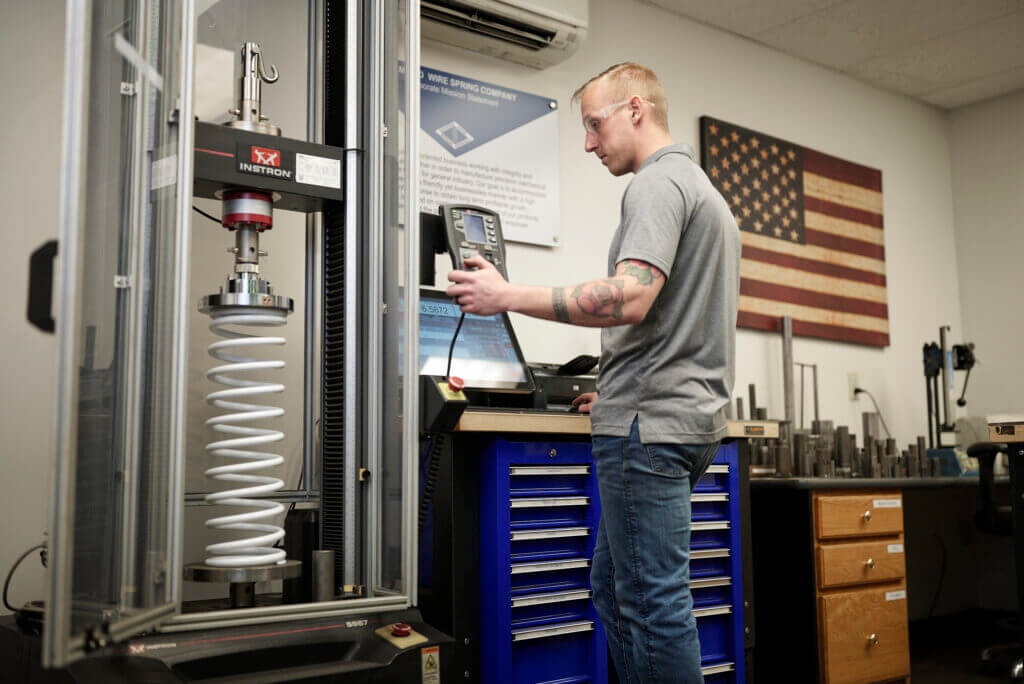
Load testing
Load testing of springs is a critical process that evaluates the mechanical properties of springs under operational conditions. We use Larson, Instron, Microstudies MC54-1000, and Tinius Olsen Scales.
Passivation (citric)
This makes the spring's treated surfaces “passive” or non-reactive to chemical contaminates, providing a robust protective layer against corrosive mediums that would otherwise cause corrosion. Diamond Wire uses a Citric acid to passivation specifications ASTM 967
Pre-Setting
Presetting is a mechanical force applied to springs that ensures they retain their designed shape and size when subjected to load at solid. We use a Microstudies MC54-1000 Electronic Preset/Load Tester
Stress Relieving
Stress relieving is a heat treatment process applied to metal springs to eliminate internal stresses that arise during the coiling process, often using a batch or line oven.
{"head":"<!-- Google Tag Manager -->\r\n<script>(function(w,d,s,l,i){w[l]=w[l]||[];w[l].push({'gtm.start':\r\nnew Date().getTime(),event:'gtm.js'});var f=d.getElementsByTagName(s)[0],\r\nj=d.createElement(s),dl=l!='dataLayer'?'&l='+l:'';j.async=true;j.src=\r\n'https:\/\/www.googletagmanager.com\/gtm.js?id='+i+dl;f.parentNode.insertBefore(j,f);\r\n})(window,document,'script','dataLayer','GTM-MSDZDRF2');<\/script>\r\n<!-- End Google Tag Manager -->","body":"<!-- Google Tag Manager (noscript) -->\r\n<noscript><iframe src=\"https:\/\/www.googletagmanager.com\/ns.html?id=GTM-MSDZDRF2\"\r\nheight=\"0\" width=\"0\" style=\"display:none;visibility:hidden\"><\/iframe><\/noscript>\r\n<!-- End Google Tag Manager (noscript) -->","footer":"<script>\r\ndocument.addEventListener('click', function (e) {\r\n var el = e.target && e.target.closest ? e.target.closest('a[href^=\"tel:\"]') : null;\r\n if (!el) return;\r\n\r\n gtag('event', 'conversion', {\r\n 'send_to': 'AW-17947902556\/hrF7CPKSt_sbENyEne5C'\r\n });\r\n}, true);\r\n<\/script>\r\n<script>\r\nfunction gtag_report_conversion(url) {\r\n var callback = function () {\r\n if (typeof(url) != 'undefined') {\r\n window.location = url;\r\n }\r\n };\r\n gtag('event', 'conversion', {\r\n 'send_to': 'AW-17947902556\/hrF7CPKSt_sbENyEne5C',\r\n 'event_callback': callback\r\n });\r\n return false;\r\n}\r\n<\/script>\r\n"}
We use cookies
We use necessary cookies to make this site work. With your consent, we also use analytics and advertising technologies to improve the site and measure marketing.